
Could a single photo become the fuel for blackmail, scams, or workplace harm? In 2026, the return of Deepnude AI-style nudification has made that risk feel immediate.
This piece explains why ordinary images can be turned into realistic nude images without consent, and why that matters now.
The technology can alter an image so it appears sexual, then spread across platforms. That shift changes who is vulnerable and how harm unfolds. Media reporting has pushed the problem into public view, prompting takedowns while also revealing how easily these outputs move online.
What you will learn: how this deepfake-capable app works, why distribution matters, who faces harm, the current U.S. policy landscape, and practical steps to reduce risk.
The core issue is simple: this is not just “another app.” It alters trust in personal photos and creates a new layer of privacy and cybersecurity threats that disproportionately target women and ripple into families and workplaces.
Key Takeaways
- Ordinary photos can be transformed into convincing nude images without permission.
- These deepfakes enable blackmail, scams, and online extortion that spread fast.
- Media and reporting shape public awareness and pressure platforms to act.
- The harm often targets women but affects many households and organizations.
- The U.S. response is evolving; practical risk reduction is possible.
- This article is friendly, fact-led, and focused on what’s changing now.
What’s happening now with AI-generated nude images online
A single ordinary photo can be reshaped into explicit content and then go viral in hours.
What’s new right now is speed and scale. Cheap tools let more individuals produce convincing deepfake content. That lowers the barrier to misuse and increases how fast images travel.
A manipulated image can become a cybersecurity lever. Attackers may pair a fake nude with doxxed contact details, stolen credentials, or phishing to extort or coerce someone. The same small tool can enable many different kinds of abuse and then be reused over time.
One recent example shows how quickly manipulated content spreads: a single non-consensual post can be copied, reposted, and mirrored across platforms, creating a copy-and-repost cycle that is hard to stop. Journalistic reporting helped force earlier shutdowns, but coverage also signals threats to bad actors.
“Critical coverage accelerated public backlash and pushed platforms to act.”
Understanding how these images are made matters. That context helps explain why the threat persists and points to realistic steps — technical and legal — later in this article.
Deepnude AI explained: how the technology creates fake nudes from images
A single photo can be turned into a believable nude-looking image by models trained to map clothing to skin.
How the core system works
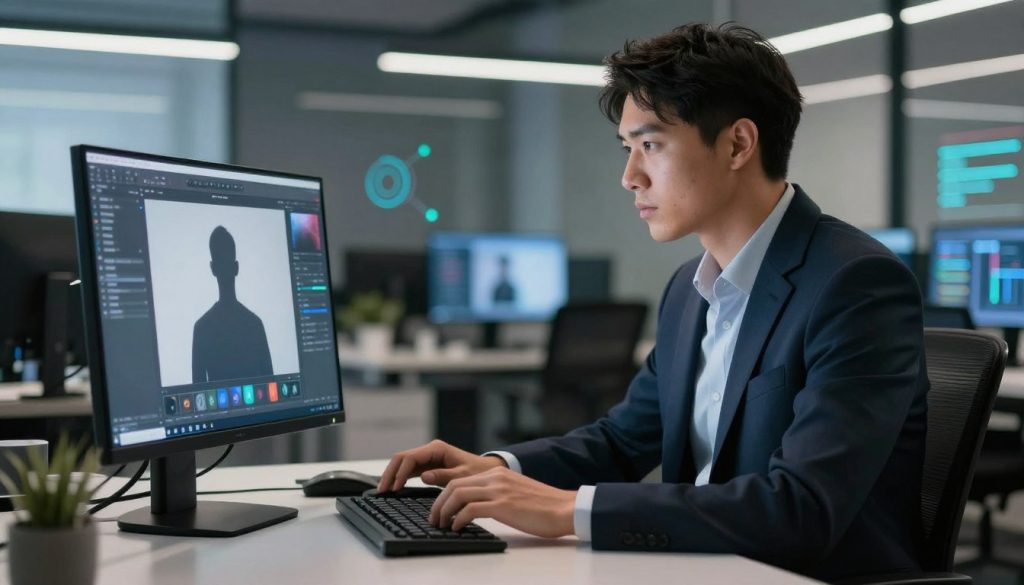
At the center is a conditional GAN: one network generates a new image and a second network judges realism. They train against each other until the generated image looks plausible.
Why image-to-image (pix2pix-style) matters
Image-to-image translation keeps layout, lighting, and background while changing clothes into skin textures. A U-Net generator with skip connections preserves faces and hair so the result still resembles the original photo.
Training data and synthetic pairs
True paired datasets of clothed and unclothed photos are rare and unethical to collect. Builders often use synthetic pairs by digitally adding clothes to nude images so the model learns a reversible mapping.
Common process steps and limits
The typical process segments clothing areas, runs inference to create new body parts, then blends edges and shadows. Failures show warped limbs, odd hands, or mismatched skin tone.
Takeaway: the ability to mass-produce passable nude images from one photo — not perfection — is what makes this technology harmful.
From app to source code: how access and distribution escalated the risk
When a hobby tool becomes a downloadable program, the scope of harm can jump overnight.
The original app made an image-to-nude conversion in roughly 30 seconds. That speed and simple interface meant anyone could make an output in minutes.
Watermark and version controversy: the free version stamped a large “FAKE” label. A paid version removed that barrier for about $50 by moving the mark to a corner. Cropping that corner turned an obvious fake into a shareable, weaponized file.
Source code and GitHub removal
After public backlash the developer shut the program down. Still, the source code resurfaced on GitHub, widening access. The repository was removed later (Update: July 9, 7:55 p.m. EST), but copies and forks had already spread.
Open source and rapid improvement
When source code is public, researchers and hobbyists can retrain models on larger datasets. That community iteration can raise realism and shorten the time to create fake nude images that look convincing.
Practical implication: addressing harm must cover more than one app. It needs controls on source sharing, model weights, and datasets so the ability to reproduce harmful outputs is limited.
Who gets harmed most: women, celebrities, and private individuals
Women are disproportionately targeted, but the risk extends to any individuals whose photos exist online or in private chats.
High-visibility cases normalize misuse. For example, images of a major celebrity circulated across Twitter/X, Facebook, Reddit, and Instagram in January 2024. That public spread made the behavior feel more acceptable and spurred copycats.
When fame shows the workflow
Celebrity circulation matters because the same steps scale down to classmates, coworkers, and friends. Platforms may act faster for a public figure, while private individuals face slower takedowns.
Minors and families: a painful real-world case
In Texas a 14-year-old student found fabricated nude images shared among classmates. The incident caused severe shame, emotional harm, and family upheaval.
Consent, coercion, and the new leverage
A fake nude can be made without consent and shared without consent. That image becomes a tool for harassment, blackmail, and sextortion even when the victim never took a nude photo.
Why sexualized deepfakes are distinct
These deepfakes create a distinct threat category focused on sexual harm, not politics. Knowing the patterns of abuse helps individuals document incidents, seek help, and push platforms and institutions to act faster.
Legal and policy response in the United States
Lawmakers and cities are racing to translate public alarm into concrete rules that limit harmful image distribution.
Federal momentum
Criminalizing distribution
The proposed Take It Down Act seeks to make it a federal crime to distribute certain synthetic nude images without consent. Its bipartisan framing raises the odds of enforcement and faster prosecutions.
State and civil remedies
Shifting liability to developers
Minnesota proposals would impose civil penalties on a company that builds or distributes nudification tools without safeguards. That approach forces technology vendors to change design and controls.
Local precedent and discovery
Using lawsuits to shape rules
San Francisco’s lawsuit aims to set legal precedent and compel document discovery. Local actions can influence national practice by exposing vendor conduct and design choices.
Platform responsibility
Moderation gaps
Platforms still struggle with rapid sharing, re-uploads, and cross-site spread. That leaves victims doing repeated takedown work even as policy evolves.
“Policy is advancing, but prevention and fast reporting remain essential.”
| Level | Primary focus | Enforcement tool | Expected impact |
|---|---|---|---|
| Federal | Criminalize distribution | Take It Down Act (prosecution) | Deterrence, uniform penalties |
| State | Civil penalties for builders | Fines, injunctions | Design changes at companies |
| Local | Precedent-setting suits | Lawsuits, discovery | Influence vendor behavior |
| Platforms | Moderation & takedowns | Policy enforcement, reporting tools | Partial relief; gaps remain |
Why Deepnude AI is also a business risk for companies
A single fabricated photo can trigger legal claims, operational chaos, and rapid reputational loss for a company. When manipulated sexual images appear inside or about an organization, HR and legal teams face immediate pressure to act.
Workplace harassment and liability
Hostile environment and organizational exposure
An employee can use a simple app to create a believable image of a colleague. That misuse may lead to hostile-environment claims, mandatory investigations, and costly settlements if leadership delays response.
Phishing, extortion, and executive targets
Bad actors or insiders can weaponize a single output to extort executives or trick finance staff into urgent transfers. Even low-quality deepfake images can prompt panic and cause breaches of procedure.

Reputation and brand impact
Brands linked—directly or indirectly—to non-consensual images face fast trust erosion. Cleanup is expensive and slow, and social sharing multiplies the harm before a full response is possible.
Compliance, governance, and the human factor
Privacy rules and incident readiness matter. Clear policies, fast reporting, and documented response playbooks reduce legal exposure and aid regulators’ inquiries.
Train staff to spot manipulation, verify requests out-of-band, and document incidents. Tools such as phishing simulations and adaptive awareness modules can strengthen habits without promising perfect prevention.
What to do next: treat synthetic sexual images as an enterprise incident — prioritize fast response, clear governance, and staff training so the company can limit harm and resume normal operations.
Conclusion
A common photo now risks becoming a manipulated nude that travels fast and far.
The central reality is simple: accessible technology can turn a normal picture into harmful content without consent. That accessibility makes prevention, reporting, and quick takedown vital.
What matters “why now” is distribution: apps, shared code, and repeat uploads let the same pattern reappear even after removals. One image can be copied and mirrored across sites within hours.
These sexualized deepfakes hurt real people — celebrities, minors, and private individuals — causing emotional, social, and financial damage. Do not resharing suspicious picture content.
Practical steps: treat unexpected images as possible manipulation, document URLs and timestamps, report quickly, and avoid reposting. Companies should pair clear policy with rapid incident handling and staff training.
Looking forward: as tools improve, the best defense mixes legal pressure, responsible platform action, and everyday verification habits to reduce the payoff for abusers.
FAQ
What is the controversy around Deepnude AI and nude image generation?
Why are “nudification” tools resurfacing as a privacy and cybersecurity threat?
How did media reporting and public backlash shape the discussion?
How do these tools create fake nude images from a single photo?
What role do conditional generative models play in this process?
What is a pix2pix-style approach and why does it matter?
Where does the training data come from, and what about synthetic pairs?
What are common steps in the generation pipeline?
Why do some generated images still fail forensic checks?
How did distribution of source code escalate the risk?
What happened with the original app’s speed, watermarking, and paid versions?
Why is open-source availability a double-edged sword?
Who is most harmed by these fake nude images?
Can you give an example of celebrity-targeted harms?
What about minors and family impacts?
How do fake nude images enable harassment, blackmail, and extortion?
Are sexualized deepfakes different from political deepfakes?
What legal actions are being considered in the United States?
What state-level actions are underway?
How are local governments and courts responding?
Where do platforms fall short on takedowns and moderation?
Why is this a business risk for companies?
How do manipulated images enable corporate phishing and executive extortion?
What compliance pressures should companies prepare for?
How important is employee training and verification behavior?

Related Posts